

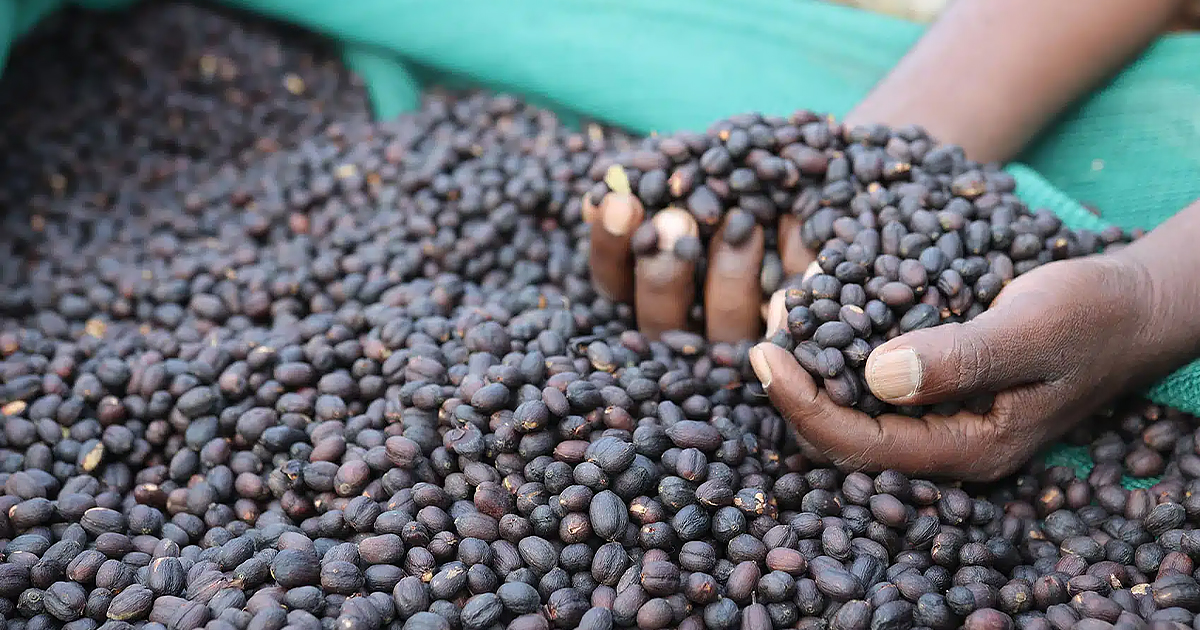
The Central African Republic (CAR) is a landlocked country in Central Africa with a coffee-producing sector that offers potential opportunities for international coffee buyers interested in sourcing African coffee.
The country’s coffee industry has historically been associated with Robusta coffee, alongside other coffee varieties, including Excelsa. Coffee production, collection, processing and commercial export activities are connected to agricultural communities and supply chains in parts of the country, particularly southwestern areas.
For international buyers, importing coffee from the Central African Republic may provide an opportunity to explore less conventional coffee origins, diversify supplier relationships, source commercial green coffee and investigate distinctive coffee varieties.
However, sourcing coffee from CAR requires careful consideration of the country’s export procedures, supplier verification, quality evaluation, documentation, inland transportation, transit arrangements and international customs requirements.
Unlike coastal coffee-producing countries, the Central African Republic does not have direct access to an ocean port. Export shipments therefore require transportation through neighbouring countries and the coordination of transit procedures before reaching an international shipping gateway.
This guide explains how to import coffee beans from the Central African Republic, including how to identify suppliers, verify coffee quality, negotiate commercial agreements, arrange export documentation, manage logistics and clear coffee through customs in your destination country.
Understanding the Coffee Industry in the Central African Republic
Coffee is one of the agricultural commodities historically produced in the Central African Republic.
The country’s coffee sector includes farmers, agricultural communities, collectors, cooperatives, processors, traders, warehouses and export operators.
The industry has traditionally been associated with Robusta coffee, which is suitable for commercial roasting, blending, instant coffee manufacturing and other applications.
Coffee production and sourcing opportunities may vary considerably depending on agricultural conditions, regional supply chains, harvest seasons, infrastructure, access to processing facilities and the operational capacity of suppliers.
International buyers should understand that the existence of a coffee-producing industry does not automatically mean that export-ready coffee is available in a particular quantity, quality or location.
Before purchasing, the buyer should confirm:
- The specific coffee-producing area
- The variety of coffee being offered
- The harvest period
- The quantity currently available
- The supplier’s ownership or access to the coffee
- The processing method
- The quality specifications
- The warehouse location
- The export arrangements
- The proposed transportation route
The Central African Republic’s coffee supply chain may involve several intermediaries. Buyers should establish whether they are dealing directly with producers, cooperatives, collectors, processors or exporters.
This distinction is important because the party offering the coffee may not necessarily be the party responsible for export documentation or international logistics.
What Types of Coffee Can You Import from the Central African Republic?
Coffee sourcing opportunities in CAR may include different varieties and commercial product forms.
The exact coffee available will depend on the supplier, producing region, harvest, inventory and quality characteristics of the particular lot.
Robusta Coffee
Robusta is an important coffee variety associated with Central African coffee production.
It is commonly used in commercial coffee products because of its body, strength, caffeine content and suitability for blending.
Robusta coffee from CAR may be investigated by buyers seeking coffee for:
- Commercial roasting
- Espresso blends
- Instant coffee production
- Wholesale distribution
- Coffee manufacturing
- Blended coffee products
- Industrial coffee applications
Buyers should evaluate the quality of the actual lot rather than assuming all Robusta coffee has identical characteristics.
Robusta can vary in bean size, density, defect levels, moisture content, flavour profile, processing quality and roasting performance.
Excelsa Coffee
Excelsa is a distinctive coffee variety that belongs to the Liberica coffee group and is often discussed separately in the coffee trade because of its characteristic flavour profile.
Coffee from the Central African Republic may present an opportunity for buyers interested in investigating Excelsa as a less conventional coffee offering.
Depending on the particular lot, Excelsa may be of interest to:
- Specialty coffee roasters
- Coffee blenders
- Experimental roasting businesses
- Coffee product developers
- Premium coffee retailers
- Buyers seeking differentiated coffee offerings
Excelsa should be evaluated through sampling, roasting and sensory testing.
Buyers should confirm the botanical identification, actual origin, processing method and commercial quantity available rather than relying on variety claims alone.
Arabica Coffee
Arabica is internationally traded across many coffee-producing regions, but buyers should not assume that Arabica is routinely available in export quantities from CAR.
If a supplier offers Arabica coffee from the Central African Republic, request detailed origin information, variety identification, growing location, harvest details, quality specifications and samples.
The availability of Arabica must be confirmed on a lot-specific basis.
Green Coffee Beans
Green coffee beans are the preferred product form for many international importers because they allow buyers to roast, blend, package and develop their own products after importation.
Green coffee from CAR may be suitable for buyers who intend to:
- Roast coffee locally
- Develop private-label coffee
- Produce blends
- Supply wholesale coffee
- Manufacture coffee products
- Distribute coffee to retailers and food-service businesses
The buyer should confirm whether the coffee is export-ready green coffee or whether further processing is required before shipment.
Coffee-Growing Areas in the Central African Republic
Coffee sourcing should be approached geographically because the location of production affects quality, traceability, transportation, consolidation and export costs.
Coffee-growing and sourcing activity is associated particularly with parts of the southwestern Central African Republic.
Buyers investigating coffee from CAR may encounter references to areas such as Mambéré-Kadéï, Sangha-Mbaéré and other agricultural locations in the southwestern part of the country.
The exact origin of a commercial coffee lot should be confirmed directly with the supplier.
Mambéré-Kadéï
Mambéré-Kadéï is an important area to investigate when researching coffee sourcing in the southwestern Central African Republic.
Buyers should request specific details about the production area, cooperative or farmer group, collection arrangements, processing facility and warehouse location.
The geographical origin should be documented as accurately as possible to support quality evaluation and traceability.
Sangha-Mbaéré
Sangha-Mbaéré is another region that may be relevant to coffee sourcing investigations in the southwestern part of CAR.
Buyers should confirm the precise sourcing location and establish whether the coffee is collected directly from producers, consolidated through traders or processed by a local facility.
Other Agricultural Areas
Coffee availability may also be encountered through other agricultural supply networks depending on the supplier’s operations and the particular harvest.
The buyer should not rely on broad regional claims without supporting information.
A reliable supplier should be able to explain where the coffee was grown, where it was collected, how it was processed and where it is currently stored.
Determine Your Coffee Import Requirements
Before contacting suppliers, define the product specifications and commercial requirements for your intended purchase.
This will help you identify suitable suppliers and compare quotations accurately.
Your requirements should include the following:
Coffee variety: Robusta, Excelsa, Arabica or another clearly identified coffee type.
Product form: Green coffee beans, roasted coffee or another product.
Quantity: For example, 500 kilograms, 1 metric tonne, 5 metric tonnes, 10 metric tonnes or a full container.
Quality specification: Commercial-grade, premium-grade or specialty-grade coffee.
Processing method: Washed, natural, dry-processed or another method.
Moisture content: The acceptable moisture range.
Defect tolerance: The number and type of defects permitted.
Packaging: Jute bags, suitable liners or another agreed packaging system.
Destination: The importing country and delivery location.
Delivery terms: FOB where an appropriate export gateway is available, or other negotiated terms that account for the landlocked logistics.
Budget: Target purchase price per kilogram or metric tonne.
Shipment period: Your preferred shipping and delivery timeframe.
Documentation: Required certificates, traceability records and customs documents.
Transportation: Whether you require the supplier to arrange inland transport, transit, ocean freight or delivery to your destination.
A detailed purchasing specification helps prevent misunderstandings and makes it easier to determine whether a supplier can meet your requirements.
How to Find Coffee Suppliers in the Central African Republic
Identifying suppliers requires a combination of commercial research, agricultural networks, exporter verification and direct communication.
Potential sourcing channels include:
- Coffee producers
- Agricultural cooperatives
- Coffee collectors
- Local traders
- Coffee processors
- Commodity trading companies
- Export companies
- Agricultural associations
- Trade organizations
- Commercial chambers
- International sourcing networks
Coffee Exporters
Exporters may provide access to consolidated coffee lots, export preparation, documentation, logistics coordination and commercial quotations.
When contacting a potential exporter, ask whether the company:
- Is legally registered in CAR
- Has the relevant commercial credentials
- Is authorized to undertake coffee export activities
- Has access to the coffee being offered
- Can demonstrate product ownership or contractual control
- Has a warehouse or processing arrangement
- Can provide samples
- Can arrange quality inspection
- Can prepare export documents
- Has experience with cross-border transportation
- Can coordinate transit through neighbouring countries
Agricultural Cooperatives
Cooperatives may provide access to coffee collected from several farming communities.
This can be useful for buyers seeking agricultural sourcing relationships, traceability or direct engagement with producers.
However, buyers should establish whether the cooperative can export directly or whether it relies on a licensed exporter or commercial intermediary.
The cooperative should provide information about its membership, production areas, collection arrangements, coffee quantities and processing capabilities.
Coffee Collectors and Traders
Local collectors and traders may aggregate coffee from farmers and sell consolidated quantities to processors or exporters.
This sourcing channel may be suitable for commercial purchases, but the buyer should carefully verify:
- Product ownership
- Supplier identity
- Coffee origin
- Quantity
- Quality
- Warehouse location
- Processing arrangements
- Export capability
- Documentation
The buyer should also confirm whether the trader is authorized to sell the coffee and whether the coffee can be exported under the applicable regulations.
International Commodity Networks
International commodity traders may offer access to African coffee sourcing relationships, including coffee from less frequently traded origins.
When dealing with intermediaries, buyers should establish the intermediary’s role, identify the actual supplier where appropriate, confirm the chain of ownership and understand which party is responsible for export documentation and shipment arrangements.
Verify the Supplier Before Purchasing
Supplier verification is one of the most important steps when importing coffee from the Central African Republic.
Because the supply chain may involve several intermediaries and transportation stages, buyers should undertake appropriate due diligence before making substantial payments.
Request the following information where applicable:
- Registered company name
- Company registration documents
- Tax identification information
- Registered business address
- Commercial or exporter credentials
- Relevant coffee-sector authorization
- Company directors or authorized representatives
- Bank account details in the company’s legal name
- Warehouse location
- Inventory details
- Coffee lot identification
- Previous export experience
- References from previous buyers
- Commercial quotation
- Product specifications
- Sample availability
- Transportation arrangements
For large transactions, buyers may consider engaging an independent inspection company, local representative, legal adviser or verification service.
Verify the Physical Coffee
If the supplier claims to have coffee ready for export, request verifiable evidence of the inventory.
Possible verification methods include:
- Physical warehouse inspection
- Independent inventory verification
- Warehouse receipt review
- Lot identification
- Sampling
- Quality inspection
- Photographs or videos with verifiable context
- Confirmation of ownership
- Independent weighing
Photographs alone do not establish ownership, quantity, quality or readiness for export.
A buyer should be particularly careful where the supplier requests substantial payment before the coffee has been independently verified.
Request Samples Before Placing a Large Order
Samples allow buyers to evaluate the quality of the coffee before committing to a significant purchase.
The sample should represent the actual commercial lot intended for shipment.
For green coffee, buyers may evaluate:
- Bean appearance
- Bean size
- Uniformity
- Moisture content
- Physical defects
- Foreign matter
- Processing quality
- Aroma
- Sample roasting performance
- Cup characteristics
For Robusta, the buyer may assess body, strength, bitterness, aroma, roasting performance and suitability for blends.
For Excelsa, buyers may conduct more detailed sensory testing because the coffee may be intended for differentiated products or specialty applications.
Sample evaluation should be documented and compared against the agreed specifications.
The buyer should also confirm that the final shipment will come from the same lot or a lot meeting the agreed specifications.
Understand Coffee Processing Methods
Coffee processing influences the final quality, flavour, appearance, moisture levels and commercial suitability of the beans.
Natural Processing
Natural processing involves drying coffee cherries with the fruit surrounding the bean before the dried material is removed.
The method may produce fruit-forward characteristics depending on the coffee, drying conditions, variety and processing practices.
Buyers should confirm that the coffee was properly dried and stored to minimize mould, unwanted fermentation and contamination.
Washed Processing
Washed processing generally involves removing the outer fruit and mucilage before drying the beans.
This process may produce cleaner and more defined flavour characteristics, depending on the coffee and processing conditions.
Buyers should ask the supplier to explain the actual processing method used for the lot.
Dry Processing
Dry processing is widely associated with natural coffee production.
The quality of the final coffee depends on drying management, moisture control, sorting, storage and handling.
Buyers should verify the drying process and the condition of the finished coffee before shipment.
Request a Formal Coffee Quotation
After identifying a supplier and evaluating the coffee, request a formal quotation.
The quotation should include:
- Seller’s legal name
- Buyer’s legal name
- Product description
- Country of origin
- Coffee variety
- Processing method
- Grade or quality specifications
- Quantity
- Unit price
- Total price
- Currency
- Packaging
- Shipment period
- Delivery location
- Incoterm
- Payment terms
- Quotation validity
- Required documents
- Transportation arrangements
For coffee sourced from CAR, the quotation should clearly explain the logistics arrangement because the country is landlocked.
The supplier should specify whether the quoted price includes:
- Transportation from the production area
- Coffee collection
- Processing
- Packaging
- Warehouse handling
- Inland transport to the transit country
- Transit customs arrangements
- Export clearance
- Port handling
- Ocean freight
- Cargo insurance
Do not compare quotations without understanding what is included in the price.
Negotiate the Purchase Agreement
Once the buyer and seller agree on the commercial terms, the transaction should be documented in a purchase agreement or sales contract.
The contract should clearly establish the obligations of both parties.
Recommended contract provisions include:
- Buyer and seller identities
- Product description
- Origin
- Quantity
- Quality specifications
- Moisture limits
- Defect tolerances
- Processing method
- Packaging
- Price
- Currency
- Payment method
- Delivery terms
- Shipment period
- Inspection arrangements
- Required documentation
- Insurance responsibilities
- Transit arrangements
- Dispute resolution
- Cancellation terms
- Force majeure provisions
For larger purchases, an independent inspection clause may help protect the buyer.
The contract should also clearly specify the export route and the party responsible for arranging transit through neighbouring countries.
Choose the Appropriate Incoterm and Delivery Arrangement
The Central African Republic is landlocked, which means coffee exports must move through another country to reach a seaport or an alternative international transport gateway.
This affects how delivery terms are negotiated.
The buyer and seller should establish whether the contract covers the coffee only at the supplier’s warehouse, at a border crossing, at a transit-country warehouse, at a port or after ocean freight.
EXW – Ex Works
Under EXW, the seller generally makes the goods available at an agreed location.
The buyer assumes substantial responsibility for transportation and export arrangements.
EXW may be difficult for buyers unfamiliar with local transport and export procedures.
It should only be considered when the buyer has the capacity to arrange the necessary logistics and export formalities.
FCA – Free Carrier
FCA may be appropriate when the seller delivers the coffee to an agreed carrier or location.
The precise delivery location should be clearly specified, particularly where the goods must be transported across borders before reaching a seaport.
The parties should confirm how export clearance and transit arrangements will be handled.
CPT – Carriage Paid To
Under CPT, the seller arranges and pays for carriage to the agreed destination.
Risk generally transfers when the goods are handed to the first carrier, rather than when they arrive at the destination.
The buyer should understand the risk-transfer point and insurance responsibilities.
CIP – Carriage and Insurance Paid To
Under CIP, the seller arranges and pays for carriage and insurance to the agreed destination, subject to the applicable Incoterms requirements.
The buyer should confirm the named destination and the insurance coverage.
FOB, CFR and CIF
FOB, CFR and CIF are commonly used in maritime trade.
However, the parties should identify the appropriate port and ensure that the goods are delivered through a suitable transport arrangement to that port.
For coffee originating in CAR, these terms should only be used where the seller’s obligations at the relevant maritime point are clearly defined and properly supported by the inland and transit logistics arrangements.
A practical arrangement may involve a named port in a neighbouring country, depending on the shipment route.
The Incoterm, named place or port and applicable Incoterms edition should be clearly stated in the commercial contract.
Central African Republic Coffee Export Regulations
Coffee exports from the Central African Republic are subject to applicable national export procedures, commercial requirements, customs formalities and sector-related regulations.
The country’s coffee sector has historically been associated with the Office de Réglementation de la Commercialisation et du Contrôle des Produits Agricoles (ORCCPA), which has responsibilities related to coffee marketing, commercial control, quality and packaging.
The World Trade Organization’s Central African Republic trade policy review documented the role of ORCCPA in coffee marketing and export, including approved operators and coffee quality and packaging controls. Buyers should verify the current operational requirements directly with the competent authorities before undertaking a transaction.
Exporter Registration and Commercial Credentials
The exporter should establish that it is legally registered and possesses the relevant credentials to conduct commercial export activities.
The buyer should request:
- Company registration
- Tax registration
- Commercial documentation
- Export credentials where applicable
- Coffee-sector authorization where required
- Evidence of authority to sell the coffee
The exporter should confirm which approvals or registrations apply to the particular coffee shipment.
Coffee Marketing and Export Authorization
The applicable coffee-sector procedures should be confirmed with the competent Central African authorities.
Buyers should verify whether the exporter is approved to market and export the coffee and whether the lot must be processed, inspected or handled through designated sector procedures.
Export Declaration
Export shipments require customs documentation and declarations.
The exporter or appointed customs representative should ensure that the coffee is accurately declared according to its product classification, quantity, value, origin and destination.
Quality Control
Coffee may be subject to quality-control and packaging requirements.
The exporter should confirm which inspections or certificates are required and arrange the appropriate procedures before dispatch.
Phytosanitary Certification
Coffee is an agricultural product and may require phytosanitary documentation.
The exporter should coordinate with the competent plant-protection authority to obtain the certificate required for the shipment and destination.
The buyer should also verify the import requirements of the destination country before shipment.
Export Documentation Required for Coffee from CAR
Export documentation is essential for customs processing, transportation, financial settlement, transit procedures and destination-country clearance.
The exact document requirements depend on the shipment, destination, applicable regulations, transit route and commercial arrangements.
Documents that may be required include:
1. Commercial Invoice
The commercial invoice identifies the seller, buyer, product description, quantity, unit price, total value, currency and commercial terms.
2. Packing List
The packing list details the packaging, number of bags, net weight, gross weight and other packing information.
3. Export Declaration
The export declaration records the shipment details and supports the customs export process.
4. Certificate of Origin
The certificate of origin identifies the country in which the coffee originated.
It may be required for customs clearance, trade documentation or preferential tariff treatment where applicable.
5. Coffee Quality Certificate
A quality certificate may be required to confirm that the coffee has been inspected or evaluated according to applicable procedures.
6. Phytosanitary Certificate
This certificate is issued by the competent plant-protection authority and confirms relevant phytosanitary compliance.
7. Fumigation Certificate
A fumigation certificate may be required depending on the shipment, treatment, packaging and destination-country regulations.
8. Export Authorization or Sector Documentation
The exporter should provide the relevant documentation required for the coffee’s commercial export.
9. Transit Documentation
Because CAR is landlocked, coffee transported through another country may require transit declarations, customs guarantees, transport documents and other supporting documentation.
10. Bill of Lading
For ocean freight, the bill of lading is issued by the shipping carrier or its agent and serves as a transport document and receipt for the cargo.
11. Insurance Certificate
Where insurance is required under the contract or delivery arrangement, the appropriate insurance document should be provided.
12. Additional Destination Documents
Depending on the importing country, the buyer may require additional documents such as food-safety documentation, importer declarations, traceability records, pesticide-residue information or other compliance documentation.
The buyer should confirm the complete document list with the customs broker and relevant authorities before shipment.
How Coffee Is Prepared for Export
After the purchase has been confirmed and the export arrangements are in place, the coffee must be prepared for international transportation.
Export preparation may involve:
- Receiving coffee from producers or collectors
- Consolidating the required quantity
- Hulling or processing
- Cleaning and grading
- Removing unsuitable beans and foreign matter
- Drying or conditioning where necessary
- Quality inspection
- Moisture testing
- Lot identification
- Packaging
- Marking bags
- Warehouse preparation
- Export documentation
The coffee should be prepared according to the buyer’s specifications and the requirements of the export destination.
Before shipment, the buyer should request confirmation of the final quantity, lot identification, packaging details and quality results.
Coffee Packaging for International Shipment
Coffee should be packaged in a manner that protects the beans during storage, handling, transit and transportation.
Common green-coffee packaging includes jute bags, woven bags and suitable inner liners.
The packaging requirements may depend on coffee quality, shipment quantity, destination and buyer specifications.
Jute Bags
Jute bags are commonly used for commercial green coffee shipments.
They provide a traditional packaging format and are suitable for handling and stacking when properly prepared.
Hermetic Liners
Hermetic liners may be used inside conventional coffee bags to provide additional protection against moisture exposure and certain environmental conditions.
They may be particularly useful where coffee will experience extended transportation, transit storage or multiple handling stages.
Bag Markings
Coffee bags should carry appropriate identification and markings.
These may include:
- Exporter name
- Country of origin
- Coffee type
- Lot number
- Net weight
- Product description
- Destination markings
- Buyer identification where agreed
All markings should be consistent with the commercial documents and shipment information.
Shipping Coffee from the Central African Republic
International coffee shipments from CAR may be transported through neighbouring countries before reaching an international seaport.
Transportation may involve road freight, rail where available and appropriate, transit warehouses, customs checkpoints and ocean freight.
The logistics arrangement depends on the origin of the coffee, destination market, available transport infrastructure, security conditions, border procedures, freight availability and commercial agreements.
Inland Transportation
Coffee may need to be transported from producing areas or warehouses to a consolidation facility, transit corridor or export gateway.
The supplier and logistics provider should establish:
- Collection location
- Warehouse location
- Transport provider
- Trucking arrangements
- Transit route
- Border crossings
- Cargo security
- Transit documentation
- Estimated transportation time
- Insurance arrangements
Transit Through Neighbouring Countries
Coffee may be transported through neighbouring countries to access international ports.
Transit procedures may involve customs declarations, transit guarantees, transport documents, cargo tracking, border inspections and the coordination of customs clearance.
The buyer should ensure that the transit arrangement is legally and operationally feasible before purchasing the coffee.
Sea Freight
Sea freight is generally suitable for larger commercial coffee shipments because it can provide lower transportation costs per unit compared with air freight.
Once the coffee reaches the designated export port, the freight forwarder may coordinate:
- Container booking
- Container allocation
- Loading
- Export documentation
- Port handling
- Ocean freight
- Shipment tracking
For larger commercial quantities, sea freight is commonly the preferred option.
Air Freight
Air freight may be considered for:
- Coffee samples
- Small quantities
- Urgent shipments
- High-value coffee
- Time-sensitive deliveries
Air freight is generally more expensive than sea freight and may not be practical for large commercial quantities.
Export Logistics Through Douala, Cameroon
Douala in Cameroon is one of the regional maritime gateways that may be considered for shipments originating from the Central African Republic.
The logistics arrangement may involve transporting coffee by road or through a combination of transport modes from CAR to Cameroon, followed by export through the Port of Douala.
The precise route and transit arrangement should be confirmed with the exporter and freight forwarder.
Before accepting a quotation involving Douala, buyers should confirm:
- Export port
- Inland transportation arrangements
- Transit customs procedures
- Border crossing
- Transit documentation
- Cargo security
- Warehouse or consolidation arrangements
- Container availability
- Freight charges
- Estimated transit time
- Port handling charges
- Ocean freight
- Cargo insurance
- Destination port
The exporter should clarify whether the quotation includes transportation from the coffee warehouse to the port or only the coffee itself.
The buyer should also confirm whether the shipment is transported under a bonded transit arrangement and which party is responsible for completing the transit procedures.
Alternative Logistics Routes
Depending on the coffee’s location, destination and transport availability, alternative regional logistics routes may be investigated.
Potential routes may involve neighbouring countries and alternative maritime gateways.
However, the feasibility of a route depends on:
- Road infrastructure
- Border procedures
- Transport availability
- Transit-country customs requirements
- Security conditions
- Shipment size
- Destination
- Freight rates
- Transit time
The buyer should not assume that an alternative route is cheaper or faster without obtaining an actual logistics quotation.
A freight forwarder familiar with Central African regional trade can help evaluate the available routes and identify the most practical arrangement for a specific shipment.
Importing Coffee into Your Destination Country
The import process does not end when the coffee leaves the Central African Republic.
The buyer must comply with the import regulations of the destination country.
Requirements may include:
- Importer registration
- Customs registration
- Import declaration
- Commercial invoice
- Packing list
- Bill of lading
- Certificate of origin
- Phytosanitary certificate
- Import permits where applicable
- Food-safety requirements
- Customs duties
- VAT or other applicable taxes
- Inspection requirements
- Cargo release procedures
Coffee is classified under the customs tariff system, generally within HS Chapter 09, with the specific classification depending on the product type and processing state.
Buyers should confirm the correct HS code with their customs broker or customs authority before shipment.
Different customs classifications may apply to green coffee, roasted coffee, decaffeinated coffee and coffee extracts or preparations.
Importing Coffee into the European Union
Businesses importing coffee from the Central African Republic into the European Union should pay particular attention to applicable food-safety requirements, phytosanitary regulations, customs documentation and traceability obligations.
Coffee imports may be subject to EU food law and applicable controls concerning contaminants, pesticide residues and other requirements relevant to the product.
Buyers should verify the applicable requirements through the European Commission’s Access2Markets portal and relevant national authorities.
EUDR Considerations
Coffee is a commodity covered by the European Union Deforestation Regulation (EUDR).
EU importers should evaluate the applicability of the regulation to their shipment and ensure that the required due-diligence and traceability procedures are met.
Depending on the applicable requirements and implementation timetable, buyers may need to obtain:
- Supply-chain traceability information
- Producer or farm identification
- Geolocation information
- Evidence of legal production
- Deforestation-related due diligence
- Relevant due-diligence documentation
Coffee sourced from the Central African Republic may require careful supply-chain verification because the sourcing area and its surrounding forest environment may be relevant to deforestation-risk assessment.
Buyers should confirm the requirements currently applicable to their business, shipment and operator category before entering into a purchase agreement.
Calculate the Total Landed Cost
The purchase price of coffee is only one component of the total import cost.
For coffee sourced from CAR, inland and transit transportation can be particularly important because the country is landlocked.
Potential costs include:
- Coffee purchase price
- Local transportation
- Coffee collection
- Warehouse charges
- Processing
- Export preparation
- Quality inspection
- Export documentation
- Applicable export fees
- Packaging
- Container loading
- Inland freight
- Transit-country customs costs
- Transit guarantees
- Border handling
- Port handling
- Freight forwarding
- Ocean freight or air freight
- Cargo insurance
- Destination port charges
- Customs clearance
- Import duties
- VAT or other taxes
- Inspection charges
- Storage
- Demurrage
- Inland transportation
- Bank charges
- Currency conversion
- Financing costs
A landed-cost calculation helps the buyer determine whether the coffee can be sold profitably after importation.
The buyer should also account for possible losses associated with damaged packaging, quality discrepancies, moisture exposure, transportation delays and other shipment-related risks.
Common Mistakes When Importing Coffee from CAR
Importers can encounter significant problems if they do not conduct adequate supplier and transaction checks.
Purchasing Without Verifying the Supplier
A supplier may claim to have coffee available without owning the inventory or having a confirmed arrangement with the producer.
Verify the supplier’s identity, business registration, product access and export capability before committing funds.
Ignoring Quality Specifications
A vague agreement stating only “coffee beans” is insufficient for a commercial transaction.
Define the variety, quality, processing, moisture content, defect tolerances, packaging and other relevant specifications.
Failing to Confirm Export Credentials
A supplier may have access to coffee but may not possess all the required credentials or documentation to export it.
Confirm the applicable export requirements before arranging payment.
Paying Without Independent Verification
Avoid making large payments based solely on photographs, documents sent through messaging applications or verbal assurances.
For large transactions, consider independent inspection, warehouse verification and professionally documented contracts.
Underestimating Transit Costs
Coffee sourced from CAR may require substantial inland transportation and transit arrangements before reaching a seaport.
A quotation that excludes inland transportation, border costs, transit documentation or port handling may be substantially more expensive than expected.
Failing to Confirm the Transit Route
The coffee must be able to move legally and operationally from its sourcing location to the export gateway.
Confirm the transport route, transit-country procedures, border arrangements, cargo security and documentation before shipment.
Ignoring Destination Import Requirements
A shipment may be properly exported from CAR but still encounter problems if the importer has not completed the necessary import procedures.
Confirm destination-country requirements before shipment.
Failing to Arrange Insurance
Cargo may be exposed to damage, loss, theft, moisture and other transportation risks, particularly where the shipment involves multiple transport stages.
Ensure that the insurance arrangement is appropriate for the shipment and that responsibilities are clearly established under the contract.
Working with Robica Coffee Limited
Robica Coffee Limited is a Ugandan coffee exporter connecting international buyers with registered coffee growers and sourcing networks across Africa.
For businesses interested in importing coffee from the Central African Republic or exploring African coffee sourcing opportunities, Robica can serve as a point of contact for discussing purchasing requirements, sourcing possibilities and potential commercial arrangements.
Buyers can communicate their requirements, including:
- Coffee variety
- Quantity
- Quality specifications
- Processing method
- Packaging
- Destination country
- Preferred shipping arrangements
- Target price
- Required delivery schedule
Robica can discuss sourcing opportunities and the feasibility of meeting these requirements, subject to confirmation of the particular origin, coffee availability, quality, pricing, documentation and export arrangements.
International buyers seeking to develop long-term African coffee sourcing relationships may benefit from discussing their purchasing requirements with an exporter familiar with regional coffee supply chains.
Frequently Asked Questions
- Can I import coffee directly from the Central African Republic? Yes, international buyers can purchase coffee from suppliers in CAR, subject to the exporter meeting applicable export requirements and the buyer complying with destination-country import regulations.
- What type of coffee is available from the Central African Republic? Robusta is historically associated with the country’s coffee industry. Buyers may also encounter Excelsa and other coffee offerings depending on the supplier and particular lot. Availability must be confirmed directly.
- Can I buy green coffee beans from CAR? Green coffee may be sourced for international roasting, blending, manufacturing and wholesale distribution. Buyers should confirm the product’s quality, processing, packaging and shipment availability.
- Is the Central African Republic a landlocked country? Yes. CAR does not have direct access to an ocean port. Export shipments therefore require transportation through neighbouring countries to reach an international maritime gateway or another transport destination.
- What port can be used to export coffee from CAR? Douala in Cameroon is one of the regional maritime gateways that may be considered. The actual route, transit procedures and export arrangements should be confirmed for the specific shipment.
- Do I need an export permit to ship coffee from CAR? Coffee exports are subject to applicable commercial, customs and coffee-sector requirements. Exporters should confirm the credentials, authorizations and documentation required for the particular transaction.
- What documents are required to import coffee from CAR? Common documents include the commercial invoice, packing list, export declaration, certificate of origin, quality certificate, phytosanitary certificate, transit documentation, bill of lading and other documents required by the destination country.
- How is coffee shipped from the Central African Republic? Coffee may be transported by road or a combination of transport modes through neighbouring countries before reaching a seaport. Sea freight is commonly considered for larger commercial quantities.
- Can I import a small quantity of coffee from CAR? Smaller quantities may be possible depending on supplier availability, minimum order quantities, packaging and transport arrangements. Samples or small shipments may be transported by air.
- How can I verify a coffee supplier in CAR? Verify the company’s legal registration, commercial credentials, product inventory, warehouse arrangements, coffee quality, origin, export capability and previous export experience. Independent inspections may be appropriate for larger purchases.
- Is coffee from CAR suitable for specialty coffee buyers? Suitability depends on the specific coffee lot. Buyers should assess traceability, processing, quality, cup profile, defects and other relevant specialty criteria rather than relying solely on the country of origin.
- Can Robica Coffee Limited help me source coffee from CAR? Robica Coffee Limited can discuss your coffee sourcing requirements and explore potential sourcing or commercial arrangements within its network, subject to availability, origin, quality, pricing and transaction feasibility.
Conclusion
Importing coffee from the Central African Republic can offer opportunities for international coffee businesses interested in exploring Central African coffee supply chains, diversifying sourcing relationships and investigating Robusta and distinctive coffee varieties such as Excelsa.
The process requires careful supplier selection, product evaluation, commercial negotiations, export compliance, documentation, transit arrangements, transportation planning and destination-country customs clearance.
Because CAR is landlocked, buyers should pay particular attention to inland logistics, transit procedures, export gateways, transportation costs and cargo security when evaluating supplier quotations.
Buyers should verify the supplier’s credentials, inspect or sample the coffee, establish clear quality specifications, confirm export and transit documentation and calculate the total landed cost before committing to a purchase.
By approaching the transaction professionally and conducting appropriate due diligence, importers can make better-informed sourcing decisions and develop sustainable commercial relationships with coffee suppliers in the Central African Republic.
Leave a Reply