

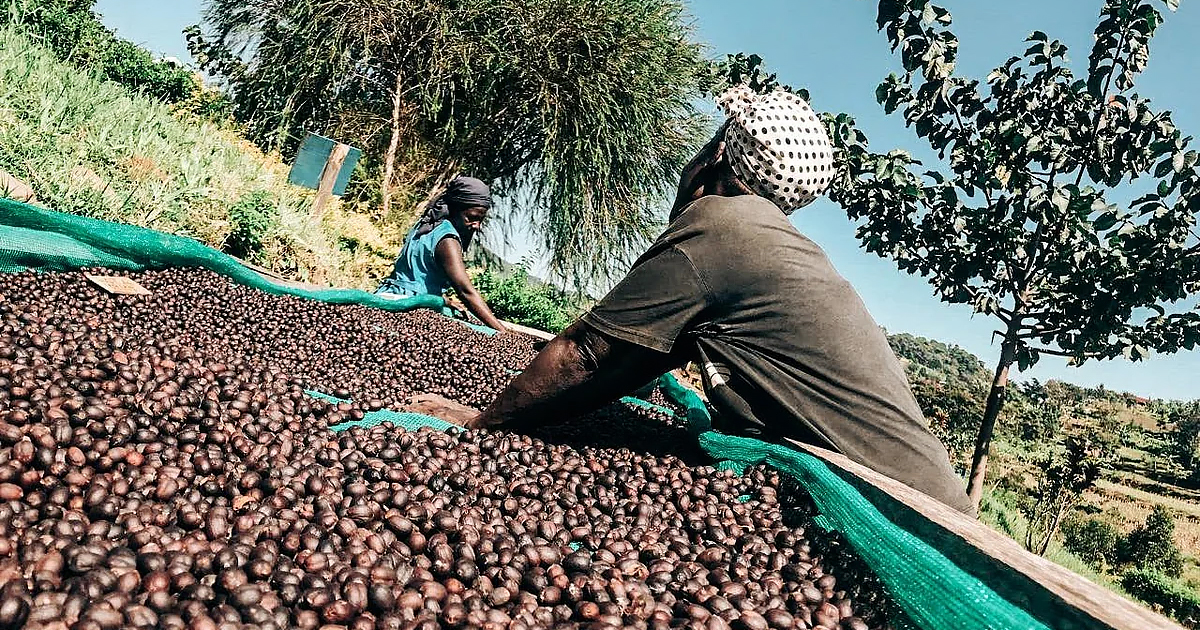
The Democratic Republic of the Congo (DR Congo or DRC) is an African coffee-producing country with a long history of coffee cultivation, particularly in the eastern regions surrounding Lake Kivu and in the lowland areas of the Congo Basin. Its coffee sector produces both Arabica and Robusta beans, offering opportunities for international importers looking for African coffee origins, commercial-grade coffee, specialty coffee, and differentiated single-origin products.
Importing coffee beans from DR Congo can be an attractive opportunity for businesses seeking to expand their sourcing networks. However, international buyers must understand the country’s supply chain, sourcing regions, export procedures, transportation routes, documentation requirements, product quality standards and the commercial risks associated with buying from a country where infrastructure and regional stability may affect logistics.
This comprehensive guide explains how to import coffee beans from DR Congo, from identifying suitable suppliers and requesting samples to negotiating contracts, preparing export documents, shipping coffee internationally and clearing the consignment in the destination country.
Understanding the Coffee Industry in DR Congo
DR Congo has historically been an important coffee-producing country in Central Africa. Its agricultural landscape supports coffee cultivation across different climatic zones, ranging from the highlands of the eastern provinces to the lower-altitude areas of the Congo Basin.
The country’s coffee industry produces two principal varieties of commercial coffee:
- Arabica coffee, primarily cultivated in the eastern highlands.
- Robusta coffee, grown predominantly in lower-altitude and warmer regions.
Coffee production is largely associated with smallholder farmers, farming communities, cooperatives, aggregators, processors and exporters. Some commercial operations also work with larger farms and organized agricultural networks.
The coffee sector has experienced disruptions over the years from political instability, declining investment, infrastructure challenges and difficulties accessing international markets. Nevertheless, coffee-growing communities and private-sector initiatives continue to develop export-oriented production, improve post-harvest handling and establish commercial connections with international buyers.
For importers, this means that coffee from DR Congo should be approached through careful supplier assessment, product sampling, traceability checks and verification of export arrangements.
Why International Buyers Import Coffee from DR Congo
Importing coffee from DR Congo offers several potential commercial advantages.
Access to distinctive African coffee origins
Congolese coffee provides buyers with access to a producing origin that is different from many of the more established international coffee-export markets. This can be useful for specialty roasters, coffee brands and distributors developing African-origin collections.
Arabica and Robusta availability
Importers can source both Arabica and Robusta, depending on the region, supplier, harvest, processing method and commercial specification.
Arabica is particularly relevant to specialty coffee businesses, while Robusta may be suitable for espresso blends, commercial roasting, instant coffee production and other applications requiring a different flavour profile and price structure.
Potential for differentiated products
Coffee from Lake Kivu’s highlands and other eastern producing areas may provide opportunities for buyers looking for single-origin coffees, cooperative-sourced products, traceable coffee and regionally differentiated offerings.
Direct relationships with agricultural suppliers
Depending on the exporter, buyers may be able to develop sourcing relationships with cooperatives, farmers’ associations, aggregators and processing facilities. Such relationships may help businesses understand how the coffee is produced, processed and prepared for export.
Diversification of sourcing networks
Coffee importers who rely on a limited number of producing countries may consider DR Congo as an additional origin, helping diversify their sourcing portfolio. However, diversification should be based on verified supply availability, logistics, quality consistency and commercial viability rather than country reputation alone.
Types of Coffee Beans Available from DR Congo
Before importing coffee, buyers should identify which type of product best suits their business.
Congolese Arabica Coffee
Arabica coffee is mainly cultivated in the eastern highlands, particularly around North Kivu, South Kivu and parts of Ituri.
Arabica from the Lake Kivu region is particularly relevant to specialty coffee buyers because of its highland growing conditions, smallholder farming systems and the availability of washed coffees produced through cooperative and washing-station networks.
Buyers interested in Arabica should request detailed information regarding:
- Growing region and district.
- Farm or cooperative identification.
- Arabica variety.
- Altitude.
- Harvest period.
- Processing method.
- Moisture content.
- Screen size.
- Defect count.
- Cup profile.
- Cupping score, where available.
- Lot size.
- Traceability information.
Arabica may be marketed as a regional coffee, cooperative coffee, washed coffee, natural coffee or a specific lot, depending on how the supplier organizes its production and export inventory.
Congolese Robusta Coffee
Robusta is grown in warmer, lower-altitude areas, including parts of the Congo Basin and other suitable producing regions.
Robusta may be suitable for:
- Commercial coffee roasting.
- Espresso blends.
- Instant coffee production.
- Institutional coffee supply.
- Industrial coffee manufacturing.
- Wholesale green coffee distribution.
Importers purchasing Robusta should pay particular attention to moisture levels, sorting, physical defects, bean size, processing consistency and cup quality.
The commercial specification should clearly state the quality grade and acceptable tolerances rather than relying only on a generic description such as premium Robusta.
Green Coffee Beans
Green coffee is unroasted coffee prepared for international shipment and subsequent roasting or manufacturing.
Most commercial coffee importers purchase green coffee because it allows them to roast locally, create their own blends, manage their roasting profiles and maintain greater control over product development.
Green coffee is commonly shipped in export bags suitable for handling, storage and transportation. Depending on the supplier and buyer’s requirements, packaging may include jute bags with suitable inner liners or alternative moisture-protective packaging.
Specialty Coffee
Specialty coffee buyers may source particular lots from highland growing areas, cooperatives or washing stations.
For these purchases, the importer should obtain samples and evaluate the coffee using an appropriate sensory assessment. Origin information, variety, processing, harvest date, traceability and lot consistency should all be considered.
A specialty designation should be supported by the actual quality and specifications of the coffee rather than simply by marketing terminology.
Major Coffee-Producing Regions in DR Congo
Understanding the producing region is important when selecting suppliers and assessing transport arrangements.
North Kivu
North Kivu is one of the important coffee-producing regions in eastern DR Congo. Arabica is grown in highland areas, while Robusta is also cultivated in suitable lower-altitude locations.
Coffee from North Kivu may be sourced through farming communities, cooperatives, collection networks and local exporters.
Buyers should establish the exact origin of each lot because coffee marketed as North Kivu coffee may come from different locations, farming systems, processing facilities and collection arrangements.
Regional security and transportation conditions can affect sourcing, consolidation, movement to warehouses and export schedules.
South Kivu
South Kivu is associated with Arabica cultivation in the highlands surrounding Lake Kivu.
Areas such as Kalehe, Kabare, Minova and Idjwi are relevant to the region’s coffee-producing landscape. Coffee from this area may be supplied through organized farmer groups, cooperatives and washing stations.
Buyers interested in South Kivu coffee may request washed Arabica, traceable lots, cooperative production, smallholder-origin coffee and other products available through exporters.
Quality and availability must be verified for each harvest and commercial lot.
Ituri
Ituri is another coffee-producing region in eastern DR Congo, with Arabica grown in suitable highland areas and Robusta available in lower-altitude zones.
Its location near the Ugandan border can be relevant to regional sourcing and transportation arrangements, although buyers must confirm the actual export route and customs procedure being used.
Tshopo and Congo Basin Regions
The Congo Basin supports Robusta coffee production in lower-altitude environments.
Coffee buyers interested in commercial Robusta may explore suppliers operating in these areas. However, product availability, processing infrastructure, transportation and export readiness can differ considerably between locations.
Understanding Coffee Processing in DR Congo
Processing has a direct influence on coffee quality, commercial value and suitability for different buyers.
Washed Coffee
Washed coffee is processed by removing the outer fruit, fermenting or mechanically cleaning the beans, washing them and drying them to an appropriate moisture level.
Washed Arabica from eastern DR Congo may be attractive to specialty buyers seeking cleaner cup profiles, more transparent processing information and coffee sourced through organized washing stations.
Buyers should ask whether the coffee is fully washed, semi-washed or processed using another method.
Natural Coffee
Natural coffee is processed by drying the coffee cherries before removing the dried fruit layers.
Natural processing may be used for Arabica or Robusta, depending on the producing region and supplier’s processing infrastructure.
Importers should examine samples to evaluate cleanliness, drying consistency, moisture and the resulting cup profile.
Other Processing Methods
Some producers and processors may use variations of traditional or semi-washed processing.
Buyers should ensure that the processing method is clearly identified in the commercial specification and that samples reflect the actual processing method of the contracted lot.
How to Find Coffee Suppliers in DR Congo
Finding a reliable supplier is one of the most important stages of importing coffee.
Buyers can explore several sourcing channels.
Coffee Exporters
Exporters may aggregate coffee from farmers, cooperatives, processors and local collection networks. Some exporters operate their own facilities, while others work with third-party processors and suppliers.
When approaching an exporter, request:
- Registered business name.
- Company registration details.
- Export authorization or licensing information applicable to coffee.
- Physical business address.
- Contact information.
- Company profile.
- Export history.
- Available coffee varieties.
- Origin and sourcing information.
- Product specifications.
- Sample availability.
- Minimum order quantity.
- Export packaging details.
- Shipping options.
- Payment terms.
The supplier should be able to explain how it acquires the coffee and how the product is prepared for export.
Coffee Cooperatives
Cooperatives can provide access to coffee produced by organized farmer groups.
Some cooperatives operate washing stations, collection facilities or quality-control programs. Others primarily organize farmers and coordinate the sale of coffee to commercial buyers.
Buyers should establish whether the cooperative itself is legally authorized to export or whether an export company is responsible for the international sale and shipment.
Agricultural Aggregators
Aggregators purchase coffee from individual farmers or farmer groups and consolidate it into larger commercial lots.
Importers dealing with aggregators should examine the sourcing records, quality-control processes, aggregation methods and traceability arrangements.
It is important to understand whether the coffee is mixed from multiple farms, districts or harvest periods and whether that mixing is disclosed in the commercial specification.
International Coffee Trading Companies
Some international coffee traders source Congolese coffee and offer it to overseas buyers through their existing distribution networks.
This arrangement may simplify purchasing, quality assessment, export coordination and shipping. However, importers should confirm the origin of the coffee, the supplier’s contractual role and the commercial terms before proceeding.
How to Verify a DR Congo Coffee Supplier
Supplier verification should be completed before making significant payments or committing to large orders.
Verify the Company’s Legal Registration
Request company registration documents and independently verify the registered name, registration number, business address and directors or authorized representatives where applicable.
The company name on the registration documents should match the name on the commercial invoice, purchase agreement, payment instructions and export documentation, or the supplier should clearly explain any legitimate differences.
Confirm Export Authorization
Coffee is a regulated export commodity in DR Congo. The World Trade Organization’s review of the DRC’s trade regime identifies green coffee among goods subject to prior export authorization.
Buyers should confirm that the exporter has the applicable authorization, registration, permits and supporting documents required for the particular coffee shipment.
Do not assume that a company selling coffee domestically is automatically authorized to export it internationally.
Confirm the Physical Coffee
Ask for current photographs, warehouse videos, packaging details, lot identifiers, samples and available stock information.
Where possible, arrange an independent inspection or physical verification before finalizing payment or shipping arrangements.
Confirm Bank Details
Payments should be made to the verified contractual entity or an appropriately documented party.
If the supplier requests payment to a personal account, an unrelated company or an account in a different country, request a clear explanation and supporting documents before proceeding.
Any change in bank account details should be independently verified through a trusted communication channel.
Review Export History
Ask the supplier about previous coffee exports, destination countries, shipping methods, ports, customs brokers and commercial references.
Where practical, verify these details independently.
How to Request Coffee Samples from DR Congo
Samples are an essential part of the coffee purchasing process.
Before purchasing a full container or large commercial shipment, request representative samples from the actual lot being offered.
Samples should ideally include:
- Green coffee sample.
- Product specification sheet.
- Origin information.
- Processing details.
- Harvest information.
- Lot number or identification.
- Moisture reading.
- Screen-size information.
- Defect information.
- Cup evaluation, where available.
The importer should evaluate the coffee through roasting and cupping or other appropriate testing methods.
The purpose is to determine whether the coffee meets the intended application, whether it is suitable for the target market and whether the quality is consistent with the agreed price.
If a sample is approved, the commercial contract should identify the lot and establish that the shipped coffee must correspond to the agreed specification and sample within defined tolerances.
How to Negotiate a Coffee Purchase from DR Congo
Once the supplier has been verified and the product evaluated, the importer can proceed to commercial negotiation.
The purchase agreement should establish the following:
Product description: Arabica or Robusta, green coffee, origin, processing method, grade and other relevant characteristics.
Quantity: The quantity in kilograms, metric tonnes or bags.
Price: The price per kilogram, per metric tonne or per bag, including the currency.
Quality requirements: Moisture, screen size, defects, grading, sample approval and any other agreed specifications.
Packaging: Bag type, bag weight, liners, labelling and palletization if applicable.
Delivery terms: FOB, CFR, CIF or another agreed Incoterm.
Delivery location: Named port, warehouse, border location or other destination.
Shipment period: The expected shipping window and agreed deadlines.
Payment terms: Deposit, balance payment, documentary payment, bank transfer, inspection conditions or other arrangements.
Inspection: Who conducts the inspection, where it takes place and who pays the costs.
Documents: The documents required from the exporter for the shipment and destination customs clearance.
Dispute resolution: The agreed mechanism for handling contractual disputes.
A properly written contract helps minimize misunderstandings concerning product quality, shipment, payment and delivery.
Understanding Incoterms When Importing Coffee from DR Congo
International coffee purchases should clearly establish the responsibilities of the buyer and seller.
FOB – Free on Board
Under FOB, the seller generally arranges delivery and export clearance to the named port and loads the goods onto the vessel. The buyer arranges the main ocean freight and insurance after the goods are loaded, subject to the applicable Incoterms rules and contract.
FOB may be suitable for experienced importers who have their own freight arrangements.
CFR – Cost and Freight
Under CFR, the seller arranges and pays for the freight to the named destination port. The risk transfer point remains at shipment, when the goods are loaded aboard the vessel, rather than at the destination.
Buyers should understand that freight paid by the seller does not mean that the seller retains risk throughout the journey.
CIF – Cost, Insurance and Freight
Under CIF, the seller arranges and pays the freight and specified cargo insurance to the named destination port, but risk generally transfers to the buyer once the goods are loaded aboard the vessel at the port of shipment.
Importers should review the insurance coverage and ensure that the required coverage is appropriate for the shipment.
EXW or Other Delivery Arrangements
Other Incoterms may be used depending on the supplier, location and transport arrangements.
For coffee purchased inland in DR Congo, the contract should carefully identify the delivery location and responsibilities for local transport, export clearance, border formalities, transit documentation and port handling.
Buyers should not agree to an Incoterm without understanding the costs and risks associated with the actual route.
Export Requirements for Coffee from DR Congo
Coffee exports from DR Congo are subject to applicable national regulations and export controls.
Green coffee is identified by the WTO as a product subject to prior export authorization in the DRC. The buyer should therefore ensure that the supplier can legally export the product and obtain the required approvals.
Depending on the shipment, origin, destination and current rules, export procedures may involve:
- Export authorization or applicable coffee export licensing.
- Customs export declaration.
- Commercial invoice.
- Packing list.
- Export contract or sales agreement.
- Certificate of origin.
- Coffee quality or inspection documentation.
- Phytosanitary certificate.
- Applicable agricultural or commodity inspection documents.
- Transport documentation.
- Transit documents when moving through another country.
- Any additional documentation required by the destination country.
The applicable export procedures should be confirmed with the exporter, customs broker and relevant Congolese authorities before the shipment is finalized.
Coffee Export Documentation
Documentation is an important part of the international coffee trade.
Commercial Invoice
The commercial invoice should identify the seller, buyer, product, quantity, unit price, total value, currency, delivery terms and other relevant transaction details.
Packing List
The packing list should identify the shipment’s packaging, number of bags, gross weight, net weight and other details required for customs and freight handling.
Certificate of Origin
A certificate of origin identifies the country in which the coffee originated.
The certificate should accurately reflect the origin of the coffee. Congolese coffee transported through Uganda, Rwanda, Kenya or another country should not automatically be treated as coffee originating from the transit country.
The applicable certificate should be obtained according to the destination market and trade arrangement.
Phytosanitary Certificate
Coffee is an agricultural commodity, and the importing country may require a phytosanitary certificate to confirm compliance with plant-health requirements.
The certificate should be issued by the appropriate authority and comply with the destination country’s import requirements.
Quality Certificate or Inspection Report
A quality certificate or independent inspection report may be required by the buyer, importing country, contract or financing arrangement.
It may confirm weight, condition, moisture, quality characteristics, packaging and other specifications.
Bill of Lading
For ocean freight, the bill of lading is an important transport document identifying the cargo, shipment details and parties involved in the transportation.
For air freight, the corresponding transport document is generally an air waybill.
Transit Documentation
If coffee travels through another country before being shipped internationally, transit documentation may be required.
This may include customs transit declarations, transit bonds, cargo tracking documents, border clearance records and other route-specific paperwork.
How Coffee Is Transported from DR Congo
Transportation is an important consideration when importing Congolese coffee because the country has limited direct access to major international ocean ports.
The route depends on where the coffee is produced, where it is consolidated, the exporter’s logistics arrangements, the destination market and the available transport infrastructure.
Eastern DR Congo Through Uganda and Kenya
Coffee originating in parts of North Kivu and Ituri may be transported overland toward Uganda and subsequently moved through Kenya for ocean freight.
Depending on the route and border crossing, cargo may travel through eastern Uganda, Kampala or other consolidation points before reaching the Port of Mombasa.
This route may be relevant to importers shipping coffee to Europe, the Middle East, Asia and other international destinations.
However, buyers should verify the actual route, transit permits, customs documentation, cargo security arrangements, road conditions and border procedures before booking.
Eastern DR Congo Through Rwanda
Coffee originating in parts of North Kivu or South Kivu may also move through Rwanda, depending on the supplier’s logistics arrangements and the available border routes.
Coffee can be consolidated and transported toward regional export infrastructure before onward shipment.
The buyer must ensure that Congolese coffee retains its correct origin documentation when transiting through another country.
Eastern DR Congo Through Tanzania
Some sourcing and logistics arrangements may use Tanzania and the Port of Dar es Salaam.
This option may be considered depending on the location of the coffee, route availability, transit costs, cargo volumes and shipping connections.
The importer should compare the full logistics cost against other available routes rather than selecting a port solely based on geographical proximity.
Western DR Congo Through Matadi
Coffee originating in western areas of the country may be transported through the port infrastructure associated with Matadi and the Atlantic coast.
This route may be more appropriate for coffee sourced from western producing or consolidation areas.
The exporter or freight forwarder should confirm the available service, transit time, port handling costs and shipping connections.
Shipping Coffee from DR Congo to the International Market
Once the coffee is purchased, inspected and prepared for export, the shipment can be arranged.
Step 1: Confirm the Shipment Details
Confirm the quantity, packaging, cargo dimensions, gross and net weights, shipment date, delivery terms, destination and agreed product specifications.
Step 2: Prepare the Coffee for Export
The coffee should be properly processed, dried, graded, sorted and packed according to the agreed quality requirements.
Packaging should protect the coffee from moisture, contamination, odours and damage during storage and transportation.
Step 3: Arrange Inland Transportation
The exporter or logistics provider arranges transportation from the coffee’s consolidation point to the relevant border, port or airport.
Where transit through another country is required, all applicable transit formalities should be completed.
Step 4: Complete Export Customs Clearance
The shipment must be declared and processed according to the export requirements applicable in DR Congo.
The exporter should provide the buyer with the necessary export documentation and shipment information.
Step 5: Arrange International Freight
The coffee may be transported by sea, air or another suitable international freight arrangement.
Sea freight is generally the preferred method for larger commercial coffee shipments because it can be more economical than air freight.
Air freight may be used for samples, small specialty lots, urgent orders or other shipments where speed justifies the higher cost.
Step 6: Obtain Shipping Documents
Once the cargo is shipped, the exporter or freight forwarder should provide the relevant transport documentation and shipment details.
The importer should review the documents carefully before using them for customs clearance or releasing payment where payment terms depend on shipping documents.
How to Import Coffee from DR Congo into Your Country
The destination-country import process depends on the country where the coffee will be received.
Coffee importers should establish their import requirements before placing an order.
Importer Registration
Some countries require importers to register with customs, tax authorities, food-safety authorities or agricultural import-control agencies.
The importer should confirm that its business is eligible to import coffee and that all necessary registrations are active.
Import Permit
Some destinations may require an import permit for coffee or agricultural products.
The importer should confirm whether a permit is required and whether it must be obtained before the coffee is shipped.
Customs Declaration
The importer or customs broker prepares the customs entry using the relevant product classification, shipment value, quantity, country of origin, transport information and supporting documents.
Green coffee is commonly classified under the Harmonized System heading 0901, with the precise subheading depending on the product, including whether it is roasted, unroasted, decaffeinated or otherwise processed.
Customs Duties and Taxes
The applicable customs duties, taxes and fees depend on the importing country, product classification, origin, applicable trade agreements and customs valuation.
Buyers should obtain a landed-cost estimate before purchasing coffee.
Food-Safety Requirements
Coffee importers may be required to comply with food-safety rules covering contaminants, pesticide residues, product hygiene, traceability, packaging, labelling and inspection.
Requirements vary by destination, so the importer should consult the appropriate national food-safety and customs authorities.
Importing Congolese Coffee into Uganda
Uganda is geographically close to several coffee-producing areas in eastern DR Congo, making regional sourcing potentially attractive to Ugandan coffee businesses.
However, importing coffee from DR Congo into Uganda should not be treated as an informal cross-border movement.
Buyers should confirm the applicable requirements for:
- Commercial importer registration.
- Customs import declarations.
- Applicable import permits or agricultural approvals.
- Phytosanitary documentation.
- Certificate of origin.
- Coffee quality and inspection requirements.
- Customs duties, taxes and fees.
- Transit and border documentation.
- Commercial invoice and packing list.
- Transport and cargo tracking documents where required.
Coffee is a regulated commodity in the regional trade environment. Uganda’s coffee export procedures, for example, involve coffee-specific licensing, sales-contract registration, quality inspection, certificates of origin and customs clearance. These export procedures are not the same as the requirements for importing Congolese coffee into Uganda, and importers should confirm the correct import procedure before cargo crosses the border.
For commercial shipments, it is advisable to work with a customs clearing agent familiar with agricultural products and regional cross-border coffee trade.
Importing Congolese Coffee into Europe
European coffee buyers should assess the applicable EU import requirements before entering into a purchasing agreement.
These may include:
- Customs classification and declaration.
- Commercial invoice.
- Packing list.
- Transport documents.
- Certificate of origin where required.
- Phytosanitary requirements where applicable.
- Food-safety requirements.
- Maximum contaminant levels.
- Pesticide residue requirements.
- Traceability obligations.
- Packaging and labelling requirements.
- Applicable environmental and supply-chain legislation.
Buyers should also evaluate any applicable European Union deforestation-related requirements and confirm whether the product, operator and transaction fall within the current regulatory scope and deadlines.
Coffee supply-chain traceability is increasingly important in international markets. Importers should request reliable origin information and supporting records from suppliers, including farm-level or plot-level information where required by the destination market.
Importing Congolese Coffee into the United States
Importers shipping coffee to the United States should confirm applicable customs and food-import requirements before the goods are dispatched.
Depending on the importer and shipment, requirements may include:
- Customs entry.
- Commercial invoice.
- Packing list.
- Bill of lading or air waybill.
- Country-of-origin information.
- Applicable customs classification.
- Food facility registration requirements, where applicable.
- Prior Notice requirements, where applicable.
- Food-safety compliance.
- Importer obligations under applicable food-safety legislation.
Importers should work with a licensed customs broker and verify current requirements through the appropriate United States authorities.
Importing Congolese Coffee into the Middle East and Asia
Buyers in the Middle East and Asian markets should verify country-specific requirements concerning agricultural imports, food products, customs procedures, phytosanitary documentation, labelling, packaging, quality inspection and any applicable importer registrations.
Requirements can differ substantially between countries, so the buyer should obtain confirmation from the destination’s customs and food-safety authorities before arranging shipment.
Calculating the Landed Cost of Coffee from DR Congo
The purchase price of coffee is only one component of the total import cost.
Importers should calculate the landed cost before agreeing to a purchase.
The calculation may include:
- Coffee purchase price.
- Local collection and aggregation costs.
- Processing and grading costs.
- Packaging costs.
- Inland transportation.
- Export documentation.
- Export clearance.
- Border charges.
- Transit fees.
- Customs inspection.
- Freight forwarding.
- Ocean freight or air freight.
- Cargo insurance.
- Port handling.
- Destination customs clearance.
- Import duties.
- Taxes.
- Warehousing.
- Delivery to the buyer’s premises.
- Bank charges.
- Financing costs.
- Currency exchange costs.
- Quality inspection.
- Losses or allowances, where applicable.
A buyer should compare the total landed cost per kilogram against the expected selling price or production cost.
This helps determine whether the coffee is commercially viable after transportation and import expenses.
Packaging and Storage of Imported Coffee
Coffee should be packed and stored in a way that preserves its quality throughout the supply chain.
Common export packaging includes suitable coffee bags, often with moisture-protective inner liners where required.
Packaging should be appropriate for the quantity, handling conditions, storage period, transport route and buyer’s specifications.
Importers should ensure that:
- Bags are properly sealed.
- Packaging is clean and suitable for food products.
- Coffee is protected from excessive moisture.
- Cargo is protected from contamination and odours.
- Containers are clean, dry and suitable for food cargo.
- Bags are properly labelled where required.
- Storage conditions are appropriate.
- Lot identification is maintained throughout the supply chain.
Green coffee can absorb moisture and external odours, so appropriate cargo handling and storage are important for preserving product quality.
Quality Control Before Shipment
Quality control is particularly important when sourcing coffee from a developing or geographically challenging supply chain.
Importers should establish a quality-control procedure before shipment.
Pre-Shipment Inspection
A pre-shipment inspection may include:
- Quantity verification.
- Weight verification.
- Bag-count verification.
- Packaging inspection.
- Moisture testing.
- Physical defect assessment.
- Screen-size assessment.
- Sampling.
- Cup evaluation where relevant.
- Lot identification.
- Review of documentation.
Inspection may be conducted by the buyer, an independent inspection company or another agreed party.
Independent Inspection
An independent inspection can help verify that the coffee matches the commercial specification.
The parties should agree on the inspector, inspection location, inspection scope, sampling method and reporting procedure before the shipment is prepared.
Quality Discrepancies
If the delivered coffee does not meet the agreed specification, the buyer should have a documented process for reporting discrepancies, submitting evidence and resolving the matter.
The purchase agreement should specify the applicable tolerances and remedies.
Common Challenges When Importing Coffee from DR Congo
Importing coffee from DR Congo can involve challenges that buyers should consider before committing to large shipments.
Supply-Chain Fragmentation
Coffee may pass through multiple farmers, aggregators, processors and intermediaries before reaching the exporter.
Buyers should establish how the coffee is sourced and whether the exporter can provide the agreed volume, quality and traceability.
Infrastructure and Transportation
Road conditions, border procedures, inland distances, transport availability and port logistics can affect shipping costs and timelines.
Buyers should obtain realistic route estimates and avoid assuming that coffee can be transported according to a fixed schedule without verification.
Regional Security Conditions
Some coffee-producing areas in eastern DR Congo have experienced insecurity and disruption.
This may affect access to farms, processing facilities, warehouses, roads and border routes.
Buyers should conduct an assessment of the specific sourcing location and proposed logistics route rather than making assumptions about the entire country.
Quality Consistency
Coffee collected from different farms or processing facilities may vary in quality.
Importers should use approved samples, lot specifications, inspection procedures and clear contractual quality requirements.
Documentation and Compliance
Export and transit documentation may involve several authorities and different jurisdictions.
Errors or missing documents can delay cargo, increase storage charges or create customs problems.
Importers should engage experienced exporters and logistics providers.
Payment Risk
Buyers should avoid sending substantial payments before verifying the supplier, the product, the contractual terms and the relevant payment arrangements.
Where possible, use payment mechanisms that provide appropriate documentary controls and contractual protection.
How to Reduce Risk When Importing Coffee from DR Congo
Importers can reduce purchasing and logistical risks by adopting a structured sourcing process.
- Identify the required coffee type, quality and quantity.
- Shortlist exporters and verify their legal registration.
- Confirm export authorization and ability to supply the contracted coffee.
- Request samples and evaluate the quality.
- Confirm the producing region and supply-chain traceability.
- Agree on the commercial specification and contract.
- Confirm the export and transit route.
- Calculate the landed cost.
- Confirm the documentation requirements for both export and import.
- Arrange independent inspection where appropriate.
- Use secure and verified payment arrangements.
- Track the shipment and maintain documentation.
- Inspect the coffee upon arrival.
- Document and resolve any discrepancies.
A structured process is particularly important for first-time importers who may not have previously purchased coffee from DR Congo.
How Robica Coffee Limited Can Help International Coffee Buyers
Robica Coffee Limited is a Ugandan coffee exporter connecting international buyers with prominent and registered coffee growers across Africa.
For buyers interested in African coffee sourcing, Robica provides a commercial point of contact for discussing sourcing opportunities, product requirements and potential coffee supply arrangements.
Buyers interested in Congolese coffee or other African coffee origins can communicate their requirements, including:
- Arabica or Robusta.
- Desired origin or producing region.
- Preferred processing method.
- Grade and quality specification.
- Sample requirements.
- Quantity required.
- Packaging requirements.
- Destination country.
- Preferred shipping terms.
- Target delivery period.
Availability, origin, pricing, quantity, quality specifications, export arrangements and shipping terms must be confirmed for each proposed transaction.
International buyers should provide their purchasing requirements clearly so that sourcing options can be assessed against their business needs.
Frequently Asked Questions About Importing Coffee from DR Congo
- Can I import green coffee beans from DR Congo? Yes, green coffee beans can be sourced for international commercial markets, subject to applicable export requirements, documentation, import regulations and the availability of suitable suppliers and lots.
- What types of coffee does DR Congo produce? DR Congo produces Arabica and Robusta. Arabica is particularly associated with the eastern highlands around North Kivu, South Kivu and parts of Ituri, while Robusta is grown in warmer, lower-altitude areas.
- Where does Congolese Arabica coffee come from? Arabica coffee is mainly associated with eastern producing areas, including North Kivu, South Kivu and Ituri. The Lake Kivu region is particularly relevant to specialty Arabica sourcing.
- Where can I buy Robusta coffee from DR Congo? Robusta may be sourced through exporters, aggregators, commercial coffee suppliers and agricultural networks operating in producing regions. Buyers should verify the supplier, origin, product specification and export authorization.
- Can I buy coffee directly from farmers in DR Congo? Some buyers may develop direct relationships with farmers or cooperatives. However, international export transactions generally require appropriate commercial arrangements, export documentation and compliance with applicable regulations. A cooperative or farmer may not necessarily be authorized to export directly.
- Do I need an export permit to ship coffee from DR Congo? Coffee is identified as a product subject to prior export authorization in the DRC. Buyers should confirm the specific requirements with the exporter and relevant authorities before arranging shipment.
- What documents are required to import coffee from DR Congo? Common documents include a commercial invoice, packing list, transport document, certificate of origin and phytosanitary documentation where applicable. Additional export permits, inspection certificates, transit documents and destination-specific import documents may also be required.
- How is coffee transported from DR Congo? Coffee may be transported overland through neighbouring countries and shipped through regional ports, depending on its origin and logistics arrangements. Eastern coffee may move through Uganda, Rwanda or other regional corridors, while coffee from western areas may use Atlantic port infrastructure.
- Can Congolese coffee be shipped to Europe? Yes, coffee can be shipped to European markets, subject to export procedures, freight arrangements and applicable European import requirements.
- Can Congolese coffee be imported into Uganda? Uganda may be a destination or transit market for Congolese coffee, but commercial importers must confirm customs, agricultural, phytosanitary, origin and other applicable import requirements before transporting the coffee across the border.
- Is Congolese coffee suitable for specialty coffee roasters? Some Congolese Arabica lots may be suitable for specialty coffee applications. Buyers should evaluate representative samples, origin information, processing details and quality specifications before purchasing.
- What is the minimum order quantity for coffee from DR Congo? The minimum order quantity depends on the supplier, available lot, product type, packaging and shipping arrangement. Buyers should request a quotation for their intended quantity.
- How do I calculate the cost of importing coffee from DR Congo? The total cost includes the coffee purchase price, local transportation, export charges, documentation, transit expenses, freight, insurance, customs duties, taxes, clearance, warehousing and final delivery. Buyers should calculate the total landed cost before committing to a purchase.
Conclusion
Importing coffee beans from DR Congo can provide international buyers with opportunities to source Arabica and Robusta coffee from a distinctive African origin.
The country’s eastern highlands, particularly the Lake Kivu region, are relevant to buyers seeking Congolese Arabica, while lower-altitude producing areas provide opportunities for Robusta sourcing.
A successful import transaction requires more than identifying a coffee supplier. Buyers should verify the exporter, confirm the coffee’s origin, evaluate product samples, establish clear contractual specifications, verify export authorization, arrange suitable transportation, obtain the required documentation and understand destination-country customs and food-safety requirements.
By conducting proper due diligence and planning the shipment carefully, international coffee buyers can explore sourcing opportunities from DR Congo while managing quality, logistics, compliance and commercial risks throughout the importing process.
Robica Coffee Limited welcomes inquiries from international buyers interested in exploring coffee sourcing opportunities across Africa. Buyers are encouraged to provide their preferred coffee type, quantity, quality specification and destination so that their requirements can be assessed against available sourcing and commercial arrangements.
Leave a Reply